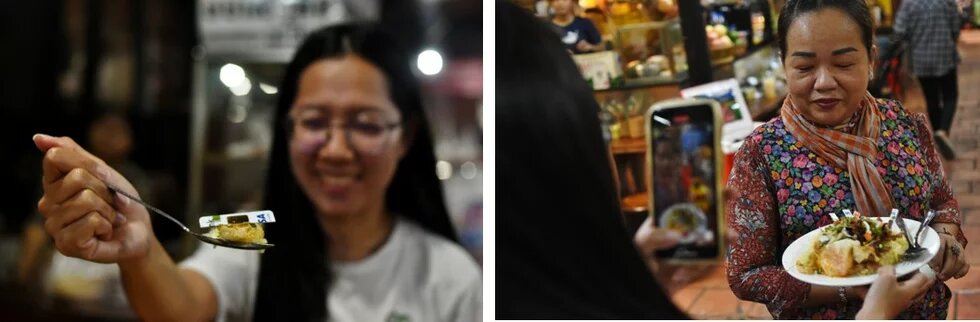
Aok Sochenda walks through Toul Tom Poung market in Phnom Penh, holding a plate of beloved grilled pork and rice. But this plate of traditional Cambodian breakfast has an additional topping: cut-up pieces of a credit card.

Sochenda is a 26-year-old influencer who runs Zerow where she posts about waste reduction, climate change and sustainable practices everyone can use to reduce their environmental impact.
She walks through the market, talking to vendors and stall owners and asks them about microplastics in the foods we consume. Sochenda informs vendors that we consume a credit card worth of microplastics in our food a week. Research from Australia shows that we consume at least 5 grams of plastic a day, which is similar to the amount of potassium we need for our bodies to function normally.
Sochenda’s comments drew bewilderment from vendors and market goers, most saying they were unaware of microplastics in the food and water we consume.
“What’s that? Plastic?” says one vendor. “No, I wouldn’t eat it. I guess it would not be good for my health.”
The push to create this kind of provocative content grew from Sochenda’s desire to be more aware of her actions and how they affected the environment. But in 2018, there were only a few resources in Cambodia talking about plastic consumption, littering, trash disposal and climate change.
Motivated to reduce her waste consumption, Sochenda started posting about how she found ways to reduce her plastic use, which then fed into conversations about how to reduce littering and disposal of waste.
“At that time no one was talking about plastic consumption here. Nowadays there are more and more projects and we even see corporations mentioning these topics internally,” Sochenda says.
While Cambodia has low carbon emissions per capita, rapid natural resource destruction, lack of adaptive capacity and poor infrastructure are making it even more vulnerable to climate change-triggered natural disasters like flooding, severe tropical storms and drought.
With more than 100,000 followers on Facebook, Instagram and TikTok, Sochenda has now expanded her content to include instructional videos on how to make do-it-yourself products, such as eco-friendly hand cream or all-purpose surface cleaner. Besides selling products at the Zero Waste shop she runs, called Zerow Station, Sochenda also recommends products from other businesses, like the composting kits produced at Compost City.
Five years after she started Zerow, Sochenda believes there has been a change in people’s behaviors and some of them are trying to reduce the use of plastic and public littering. But it is still challenging to get people worried about the larger effects of climate change, she says, some of which do not impact everyone equally.
“Climate change is still not as easy to talk about here. People don't relate to it much. But some people are starting to be more aware of changes to the weather, especially people who work outdoors, like at a market or on the street,” she says.
This article is an excerpt from "Profiles of Courage." Click here for the full reading.