
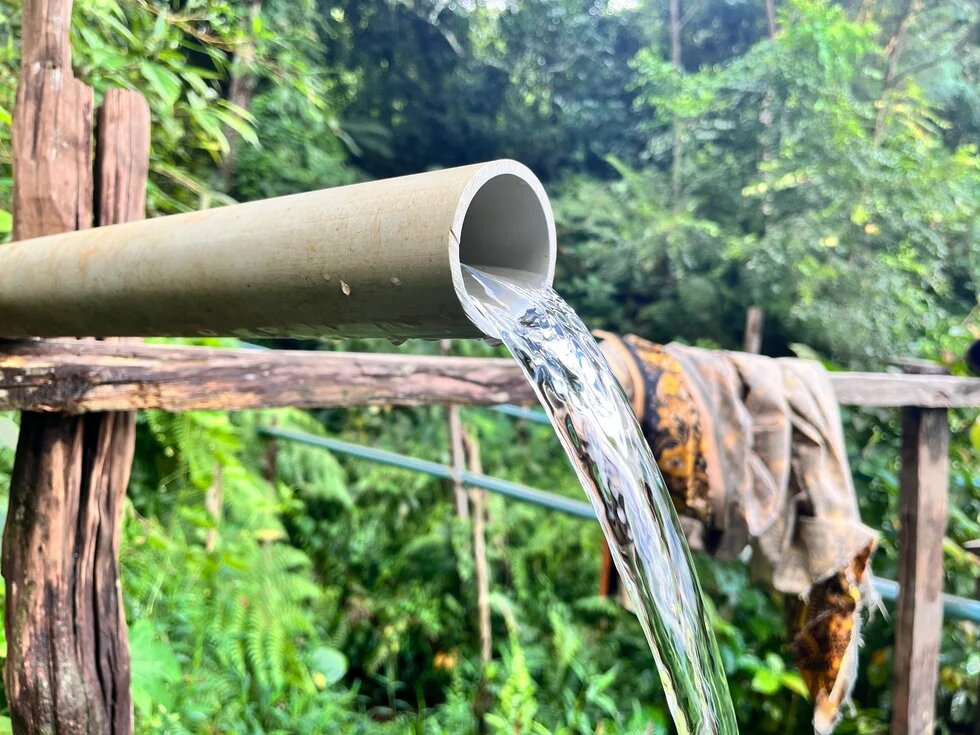
For many people living in rural villages, accessing water seems straightforward because wherever there is water, villagers simply dig a well and pump it up. However, for Indigenous communities in Cambodia, retrieving water is far more than a physical chore, as it is a sacred process guided by ancestral customs, spiritual respect, and collective solidarity, with Indigenous women standing at the very center as leaders and custodians of this tradition.

The deep connection between Indigenous communities in Cambodia and their natural environment offers a profound lesson in sustainability, culture, and community care.
A woman who led the community to access to water
In a small village located in L'ieng Krae in the O'Chum District of Ratanakiri Province, a farmer and traditional weaver named Aunt Pav Mach (a Tampuan Indigenous community member) lives as a highly respected figure and also widely known as the "Village Specialist." Deeply committed to preserving ancestral heritage, she leads the community in protecting their surrounding environment and maintaining their vital water sources.
Traditionally, the village’s ancestors channeled fresh water from the mountain springs directly into the community using linked bamboo pipes.
Over time, these bamboo pipes deteriorated, causing leaks and structural breaks throughout the system. Driven by her love for her community and culture, Aunt Pav Mach stepped forward to lead the villagers to organize a traditional spiritual offering, known as Saen Prean, to pay homage to the guardian spirits (Neak Ta) residing at the spring head. Following the ritual, she mobilized local youth to repair and maintain the water delivery system.
Due to the scarcity of bamboo caused by deforestation for farmland and housing as the population grew, the community collectively pooled their funds to purchase durable plastic piping. While switching to plastic was a practical necessity, Aunt Pav Mach continues to teach young people the core philosophy passed down by her ancestors. "All the water flowing from the mountain comes from the forest. If we want water to flow for us every day, we must protect the forest from disappearing. Water is the body of the forest, and the forest is the soul of our lives." This is because their ancestors’ life connects to nature.
The Indigenous Relationship with Natural Water Sources
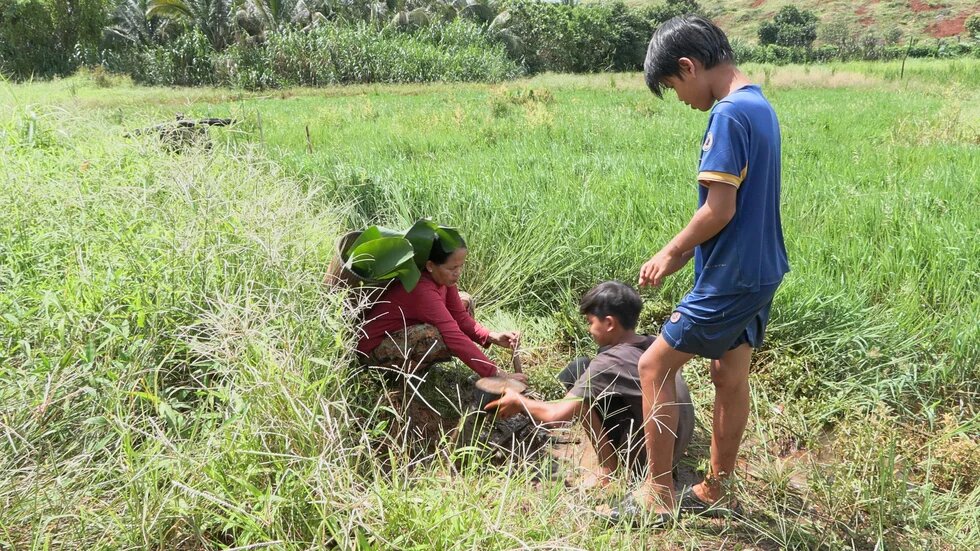
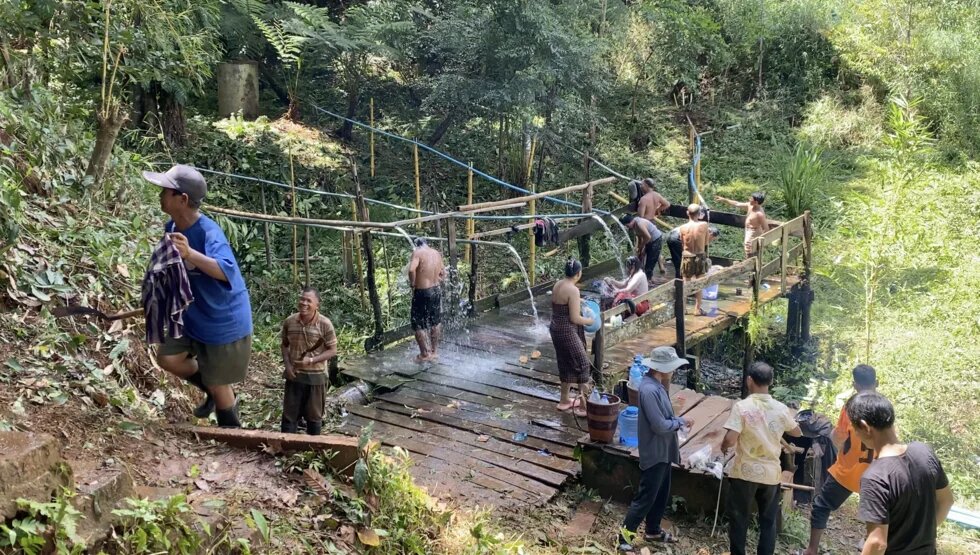
To Indigenous communities, water is not merely a resource for daily consumption, but rather a sacred sanctuary, a social hub, and a spiritual realm. Natural water sources such as streams, rivers, waterfalls, ponds, and mountain springs are revered as the dwelling places of guardian spirits who protect the village.
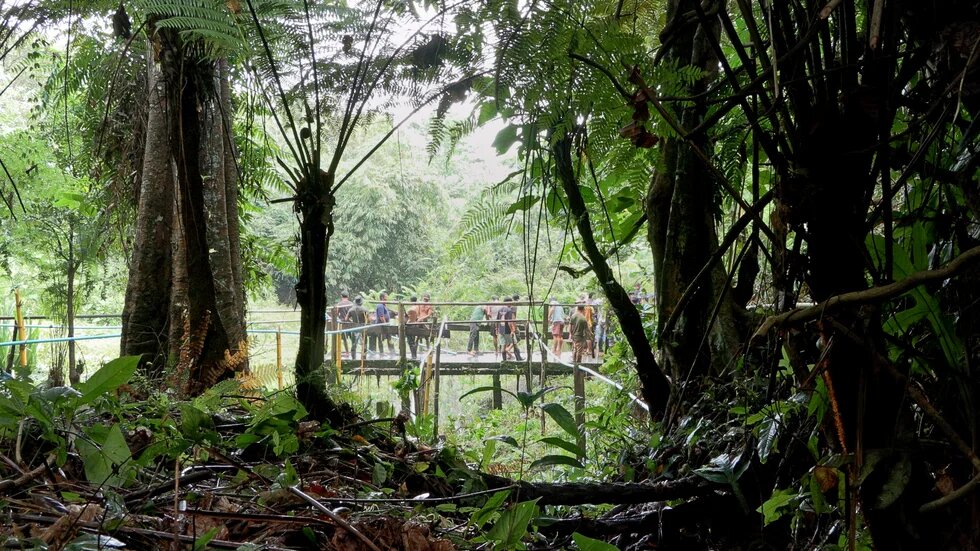
Finding a source of water relies on subtle environmental knowledge passed down through generations, as villagers look for “indicator plants” like large canopy trees, wild orchids, and wild banana plants that signal underground water or fresh springs, while also listening for the sounds of frogs and specific insects.
Beyond physical cleaning, water symbolizes spiritual purity because when traditional rules are breached or conflicts arise within the village, water rituals are performed to wash away misfortune and restore spiritual balance. Gathering at water sources also serves as an important space for villagers to connect and share news.
During the rainy season, water is abundant throughout the region, though often murky, whereas in the dry season when small streams dry up, villagers must journey deep into the forest to locate the headwaters or dig shallow holes along dry riverbeds to patiently collect seeping spring water.
Rituals and Ceremonies Surrounding Water Collection
For Indigenous communities, the relationship between forests and water sources is deeply understood through the concept that "the forest is the mother of the water." Large trees act as natural sponges, absorbing and storing water beneath the ground. Without forests, the soil dries out, streams vanish, and the guardian spirits (Neak Ta) of the water depart, bringing drought to the village. Indigenous spiritual practices highlight a core belief that humans did not create the water sources, but rather that ancestors and guardian spirits created them and entrusted them to human care. There are four primary rituals governing water usage within the community.
First, the Permission and Pathfinding Ritual is performed before tapping into a new spring or digging a well deep into the forest, where villagers present small offerings like rice wine (Sra Piang), ancient coins, wild banana, chicken, or sacred leaves to request permission from the local spirits to enter and extract water safely without causing offense.
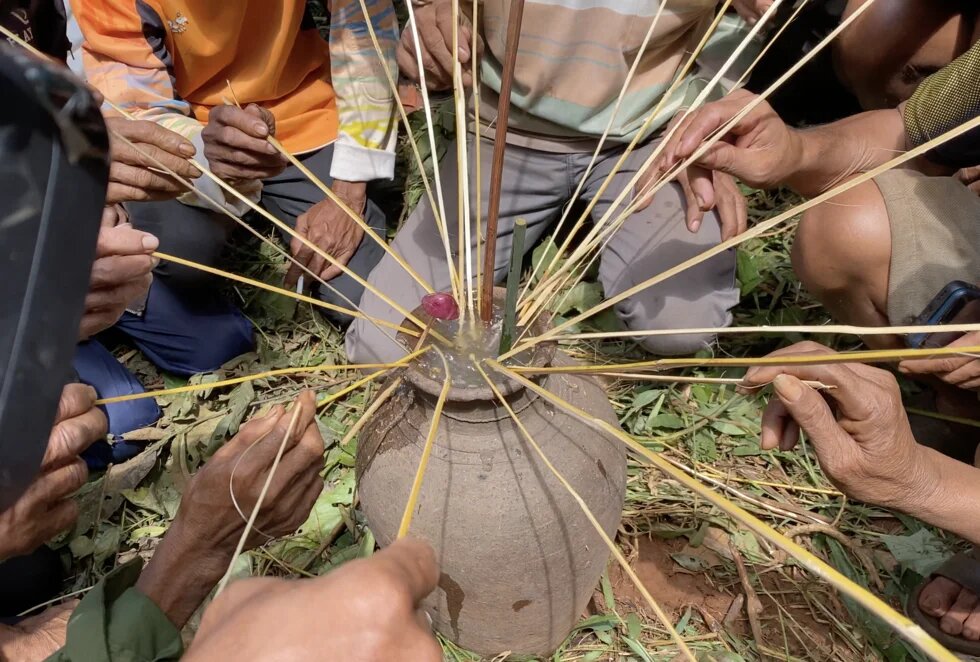
Second, the Purification and Apology Ritual is conducted when traditional taboos are broken, such as polluting water or cutting trees in restricted zones, or during droughts and outbreaks of illness, where animal offerings are made to seek forgiveness from the spirits and restore environmental and communal balance.
Third, the Annual Thanksgiving and Blessing is held regularly after the harvest or at the start of the rainy season, bringing the entire village together at the main stream or spring head with traditional music and shared feasts to express gratitude to the forest and water spirits while strengthening community unity.
Fourth, the Pipe Repair and Maintenance Ritual takes place before fixing broken water pipes in the forest, where villagers hold a ceremonial gathering, clear space, plant banana trees near the water source, offer pig's blood, and perform prayers.
Planting banana trees near water sources during repair rituals combines practical wisdom with spiritual symbolism in several ways.
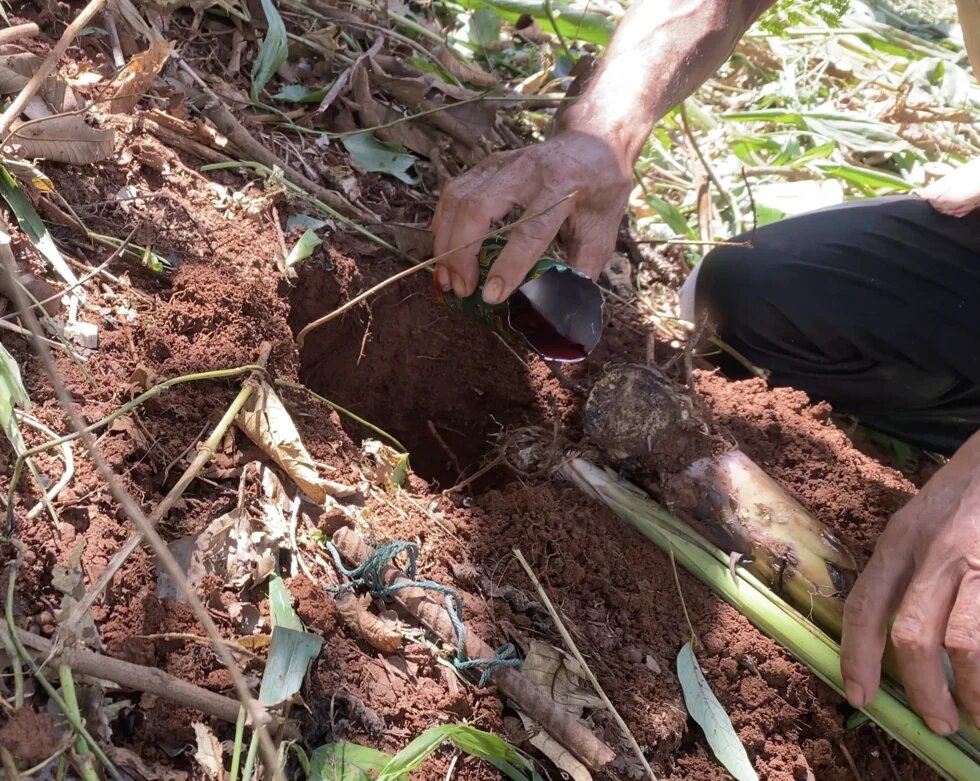
According to local beliefs, banana trees represent coolness, abundance, and generation of growth. Therefore, planting them symbolizes bringing harmony and peace to the community while avoiding strife. In addition to their spiritual meaning, banana leaves and trunks are used in rituals, while the fruit provides food for villagers and forest wildlife visiting the water source. Performing the ritual also seeks spiritual protection for the repair crew, who face risks like snakebites or accidents when entering deep forests or hidden springs. Furthermore, prayers are offered during the planting to ensure the spring flows smoothly, remaining pure, cool, and free from harm or blockages.
Through these rich practices and rituals, Indigenous communities demonstrate that ecological preservation is not just a modern scientific concept, but a deeply rooted way of life where forest, water, and human well-being remain inextricably linked.
This story was documented by Leng KimChheng and Nien Blorng, young Indigenous filmmakers trained by the Bophana Audiovisual Resource Center—a project supported by the Heinrich Böll Stiftung. Their work highlights how Indigenous knowledge offers solutions to modern environmental crises. The traditional beliefs in this document are collected from the Tampuan indigenous community where Aunt Pav Mach lives. It does not necessary reflect other Indigenous ethnicities.
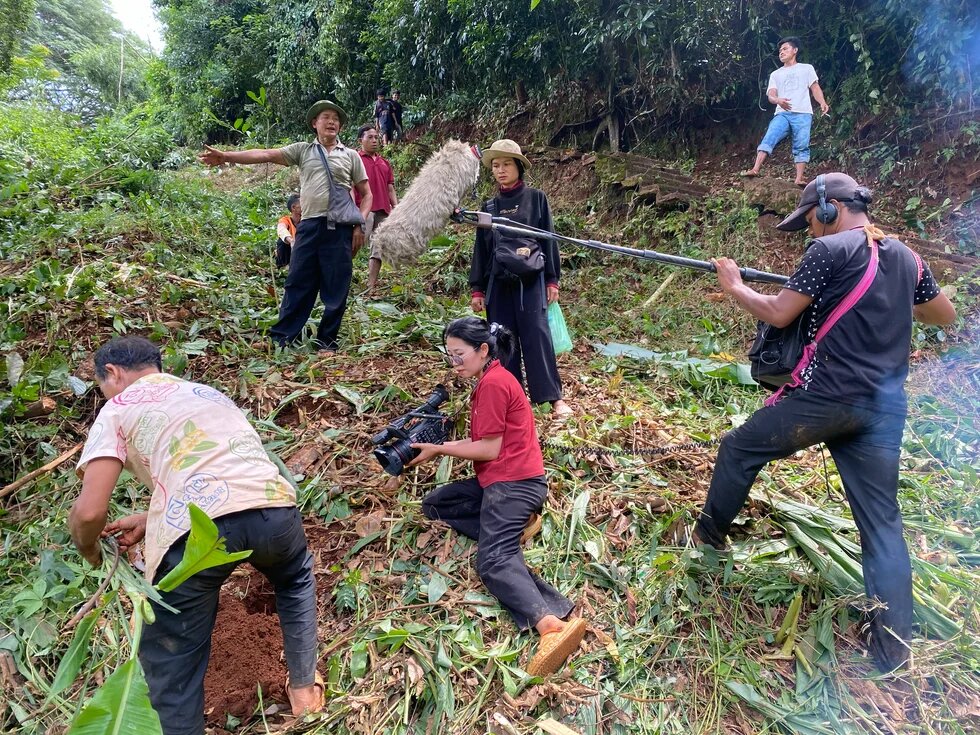
Watch this short film documentary here:

This short documentary was also screened in Phnom Penh cinemas during the 15th CIFF 2026, and one of its side event, the Mekong Discovery Days, for a panel discussion titled, Guardian of the Water and Forest, and I moderated the session on March 25th 2026.
I thank our director Dr. Heike Löschmann, for the support and review of this article.