
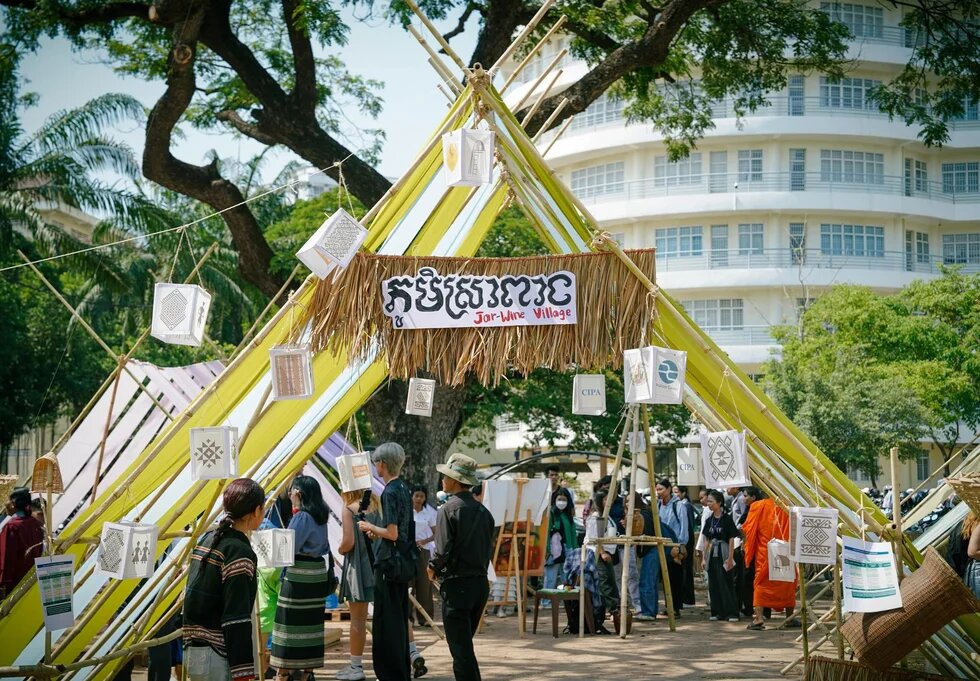
Phnom Penh, March 28, 2026 — History was made at the Royal University of Phnom Penh (RUPP). For the first time, a large-scale Indigenous Festival took place in Cambodia’s capital as part of the 15th Cambodian International Film Festival (CIFF).
Called “Water, Land, Forest: Indigenous Festival,” the day-long event brought together Indigenous communities, artists, filmmakers and young people to celebrate culture, nature and the voices of Cambodia’s Indigenous peoples. And I was lucky to be part of it.

As part of HBF’s support for the festival, my colleagues were busy documenting the activities, while I helped with the outdoor film screenings. From 1:00 PM to 5:00 PM, I was based in the “Jar-Wine Village,” one of nine interactive areas.
The festival was huge, with 25 activities across nine zones, so I did not have the chance to see everything. But even spending most of my day in one small screening tent gave me an experience I will not forget.
The Jar-Wine Village
The screening tent was a place to watch, listen and learn. Small groups of around 10 people watched six short films in English and Khmer. Each film was only 10–15 minutes long, but the stories stayed with us long after the films ended.
One film that stood out to me was “Water Source,” a documentary supported by the Heinrich Böll Foundation. The film features Indigenous knowledge holder Pav Mach, who shares her community’s deep relationship with water.
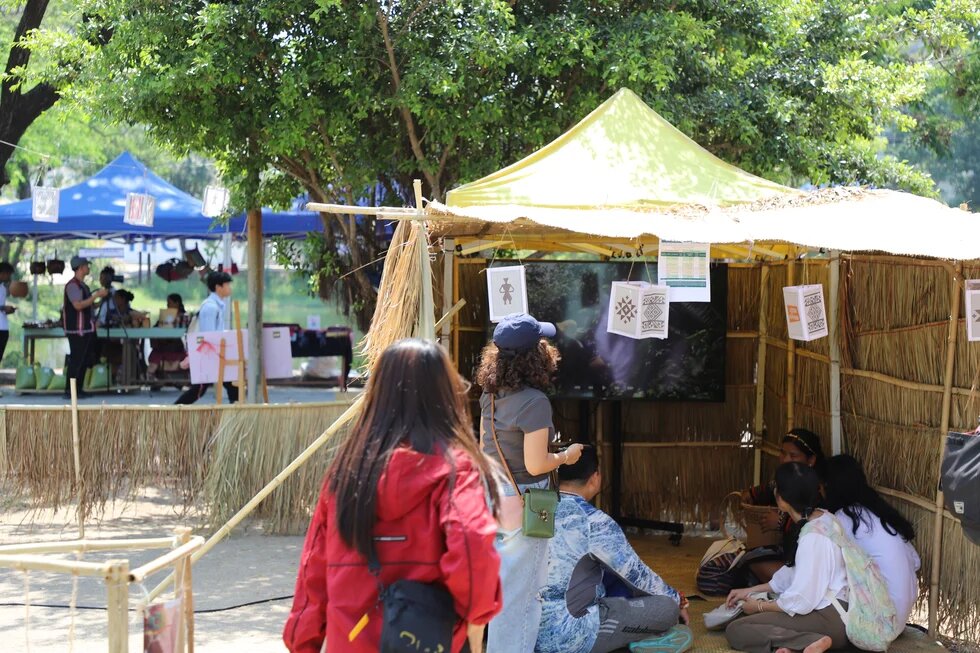
After each screening, visitors could talk directly with Indigenous knowledge holders and community leaders from different parts of Cambodia. They included:
The discussions were open, honest and full of hope. It was especially meaningful to see visitors who were learning about Indigenous issues for the first time listening and asking questions.
What I Experienced at the Festival
1. Starting with a Blessing
The festival opened with a Suoy Indigenous ceremony led by community elders. The ceremony, also known as a Spirit Offering or Prayer for Rain, honours ancestors and asks for peace, prosperity and a good farming season.
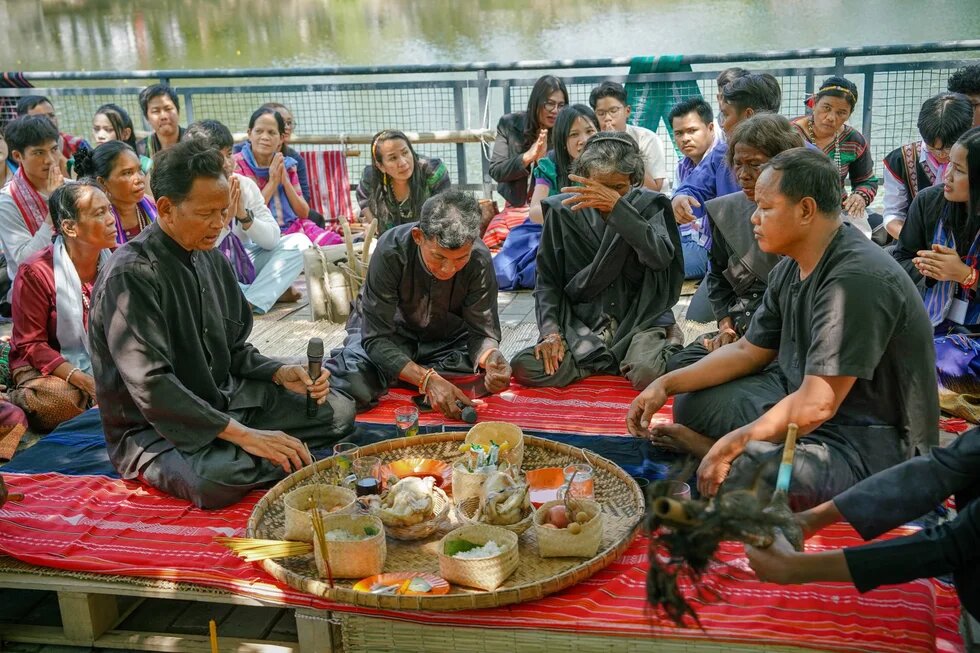
It was a powerful reminder of the close relationship between Indigenous communities, their traditions and nature.
2. Culture, Art and Traditional Knowledge
The first two zones featured Tampuan weaving, Suoy musical instruments, photography, fashion and art from Cambodia and other countries.
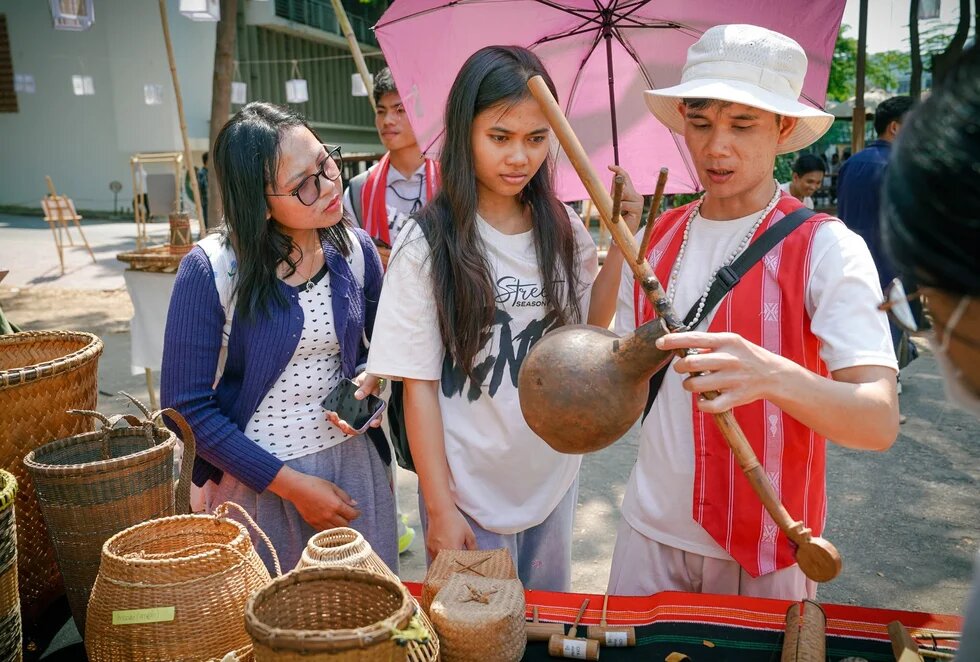
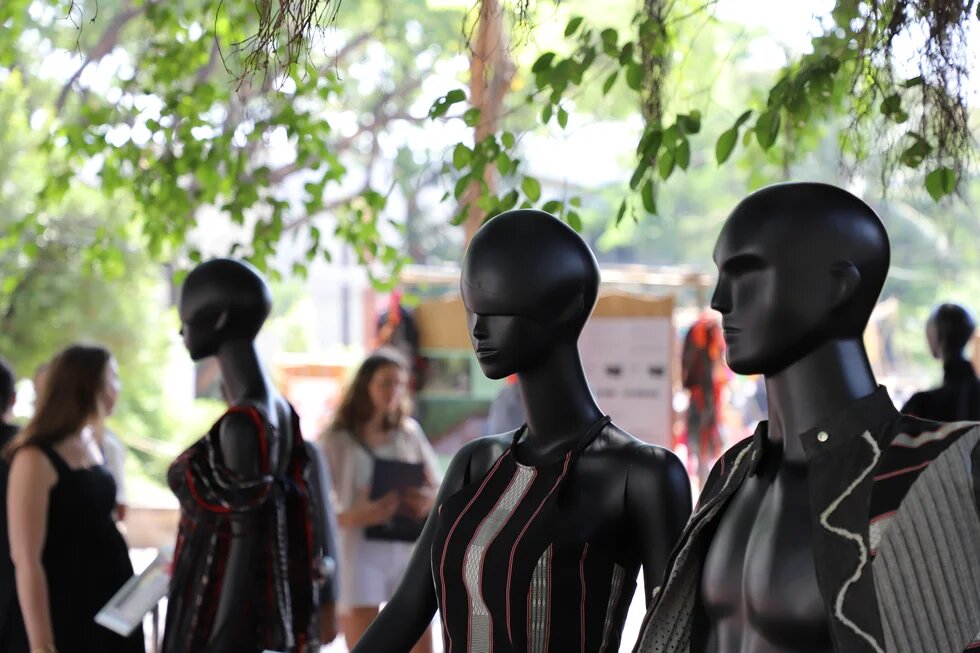
There were also projects working to preserve Indigenous languages, culture and knowledge, including the Sarika Project in Mondulkiri and the Kuipedia Project, which focuses on Kui language and culture.
3. Indigenous Crafts and Food
Another area displayed and sold handmade textiles, crafts and local produce from Indigenous communities.
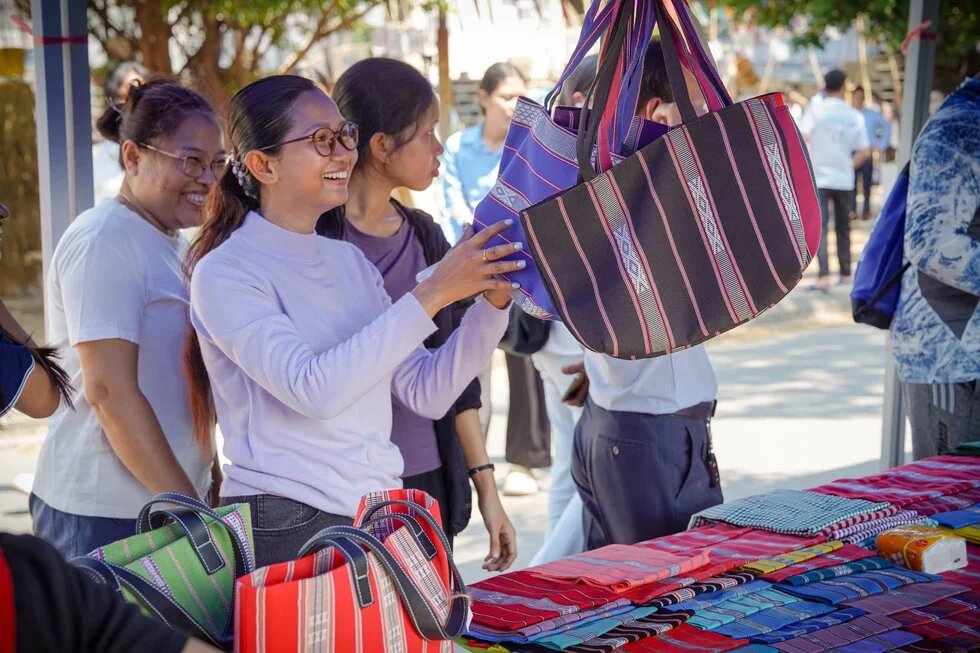
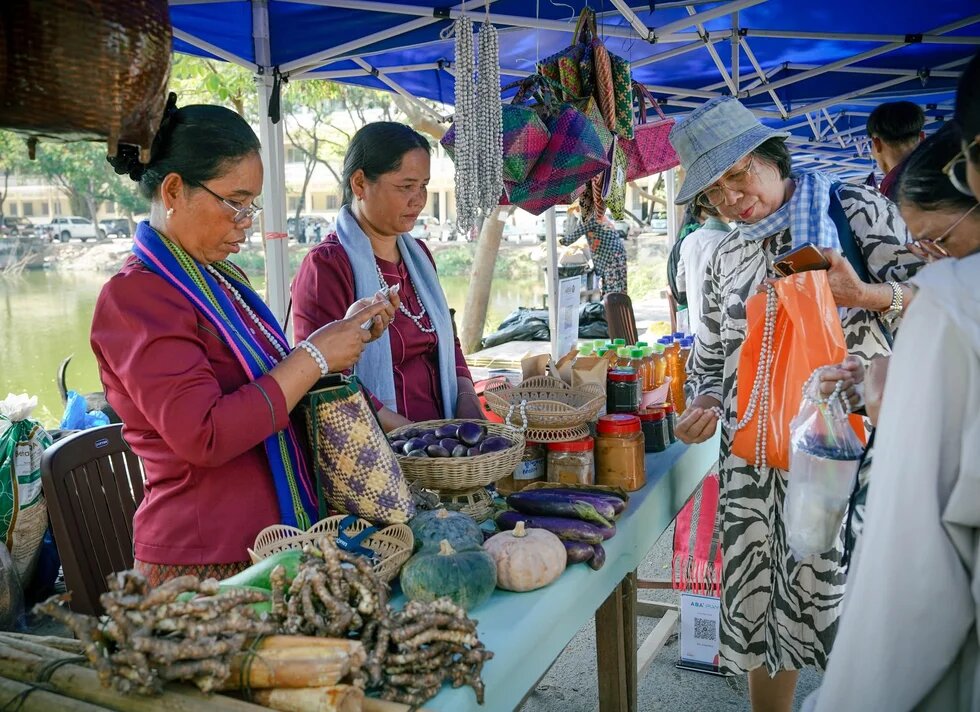
In the Food & Youth Zone, Indigenous young people prepared traditional dishes, snacks and even Indigenous popcorn.
My parents were lucky enough to try some of the rice and sausages. They loved them!
4. Dancing Together
When my shift ended at 5:00 PM, I finally had time to explore the main festival area.
And I arrived just as the traditional Jarai solidarity dance, “Svang,” was beginning.
For the first time in my life, I joined the dance. We held hands in a circle and moved together to the rhythm of the music.
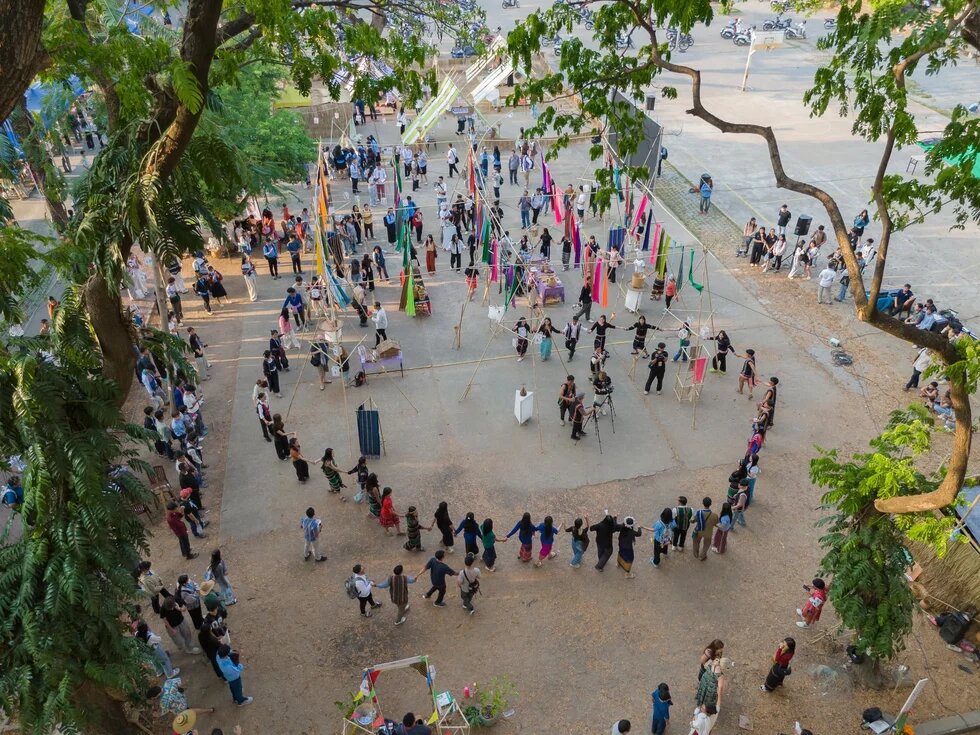
It was one of those moments that is difficult to describe in words.
Later, the programme continued with an Indigenous musical opera, a cultural fashion show and a performance of “La Vang” by Youn Mondet, combining modern sounds with traditional melodies.
Hundreds of people danced, watched, laughed and celebrated together.
I looked around and saw people from different backgrounds sharing the same space and enjoying the moment together. It felt very special.
5. Films Under the Evening Sky
After sunset, the outdoor cinema became one of the festival’s main attractions.
The evening screenings focused on three themes:
- Water – A Tasty Drop, Payuun, Sukande Kasaka (Ailing Land)
- Land – Threads, Boodjara, Songs of the Highlands, Atharaka
- Forest – stories about protecting land and forests around the world.
A Festival to Remember
According to the Pulitzer Center, around 3,200–3,500 people attended the festival — including my parents, who left with a day full of new experiences and memories.
For me, the festival was more than a cultural event.
It showed me that Indigenous traditions are not simply part of the past. They are living traditions that continue to shape communities and offer important knowledge about how we live with nature.
I feel honored to have played even a small role in this historic day.
And I am very grateful that I was there.
Want to learn more?
Follow the official Facebook page of Water, Land, Forest: Indigenous Festival: https://www.facebook.com/profile.php?id=61578718346735
Read more about the festival at the Pulitzer Center: Pulitzer Center blog
I thank our director Dr. Heike Löschmann, for the support and review of this Blog.